ABS engineered and supplied an AEC chain solution to tackle premature wear and elongation in Fertinal’s phosphate rock reclaimers. The installed chain has exceeded 20 months in operation and remains in service beyond the previous annual replacement interval.
AEC Extends Phosphate Rock Reclaimer Chain Service Life
Download the project: Access the project in PDF format
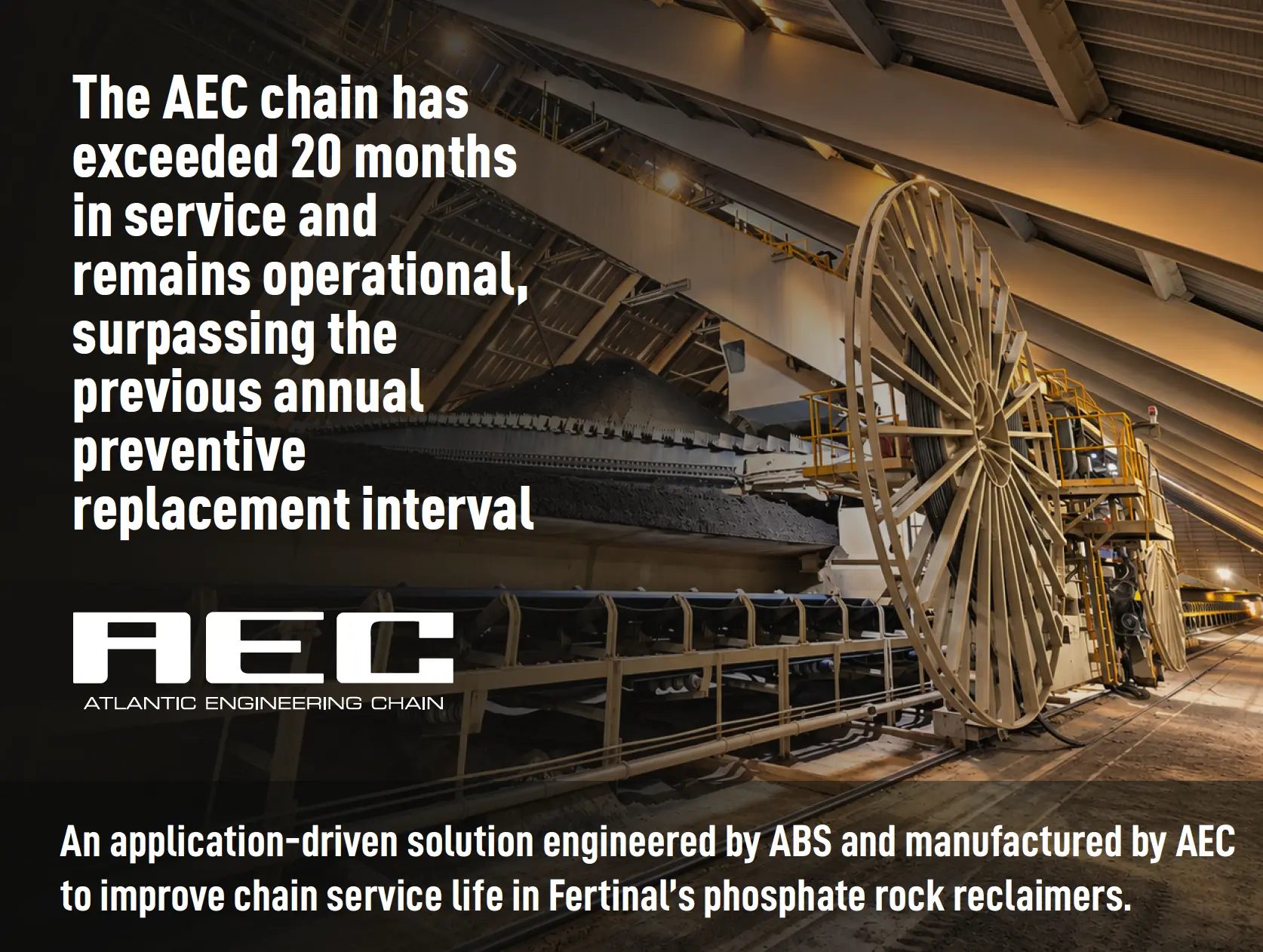
ABS engineered and supplied an AEC chain solution to address premature wear and elongation in Fertinal’s phosphate rock reclaimers in Lázaro Cárdenas, Mexico. By optimizing chain materials while retaining the existing design, the solution has exceeded 20 months in service without replacement, surpassing the previous annual preventive replacement interval.
Sector: Fertilizer Production — Phosphate Rock Handling.
Equipment: Phosphate Rock Reclaimers — Chain and Bucket System.
Field Scope: Application analysis, chain material optimization, AEC manufacturing and supply, and technical support during on-site assembly and startup.
Criticality: Addressing premature chain wear and elongation to maintain reliable reclaimer operation, while retaining the existing chain design and dimensional compatibility.
Key Factors:
- 20+ months in operation without replacement — Beyond the previous annual replacement interval.
- Optimized materials — Improved wear resistance and reduced premature elongation.
- Full compatibility — Designed to fit the existing reclaimer infrastructure.
- ABS + AEC — Engineering, manufacturing and technical support.
A key component in fertilizer production
At Fertinal’s industrial complex in Lázaro Cárdenas, Michoacán, Mexico, phosphate rock handling is part of the fertilizer production process. This raw material is used to produce phosphoric acid, which is subsequently used to manufacture phosphate fertilizers.
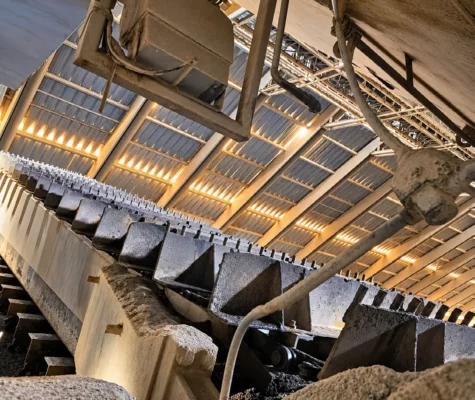
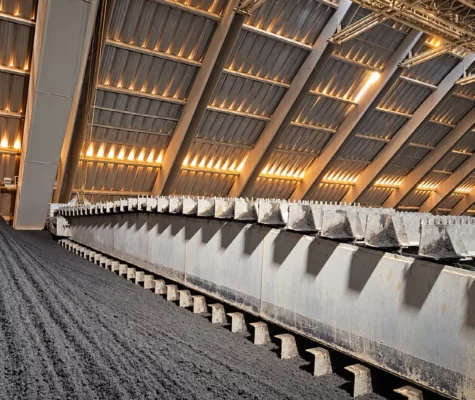
Reclaimers retrieve stored rock and feed it into the conveying system that supplies the process. Their chains drive the buckets that collect and move the material, making chain performance an important factor in maintaining a steady raw material supply.
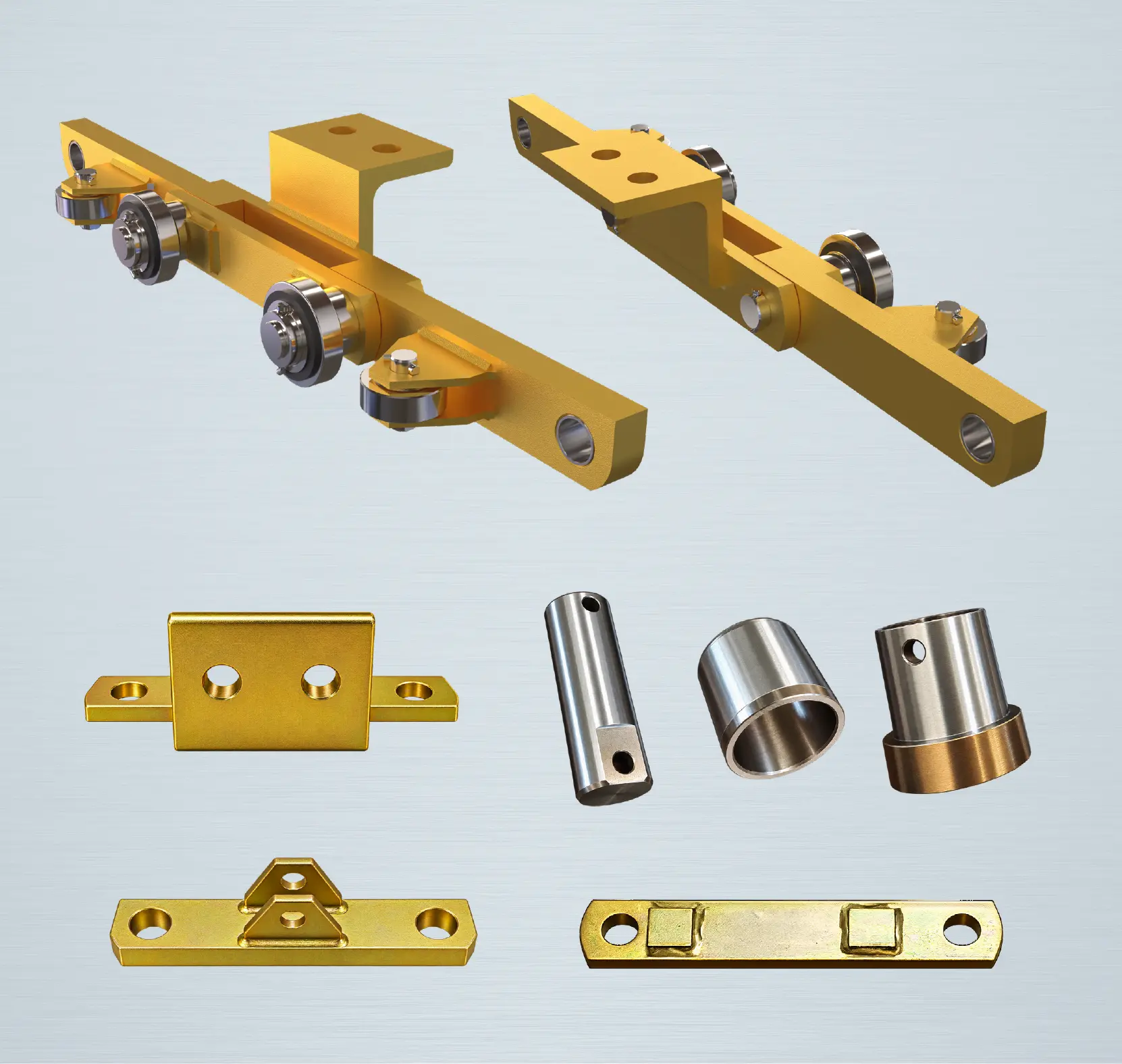
To address premature wear in the existing chains, ABS analyzed the operating conditions and proposed a solution manufactured by AEC.
The challenge: premature chain wear
The original chains experienced premature wear and elongation associated with materials that were not adequately suited to the application’s demands. This created recurring replacement and maintenance needs.
The solution had to withstand the abrasive conditions of phosphate rock handling, along with dust, moisture, variable loads, and impact loading. The challenge was to extend chain service life while ensuring dimensional compatibility for every component, without modifying the existing reclaimer infrastructure.
Optimized materials for longer service life
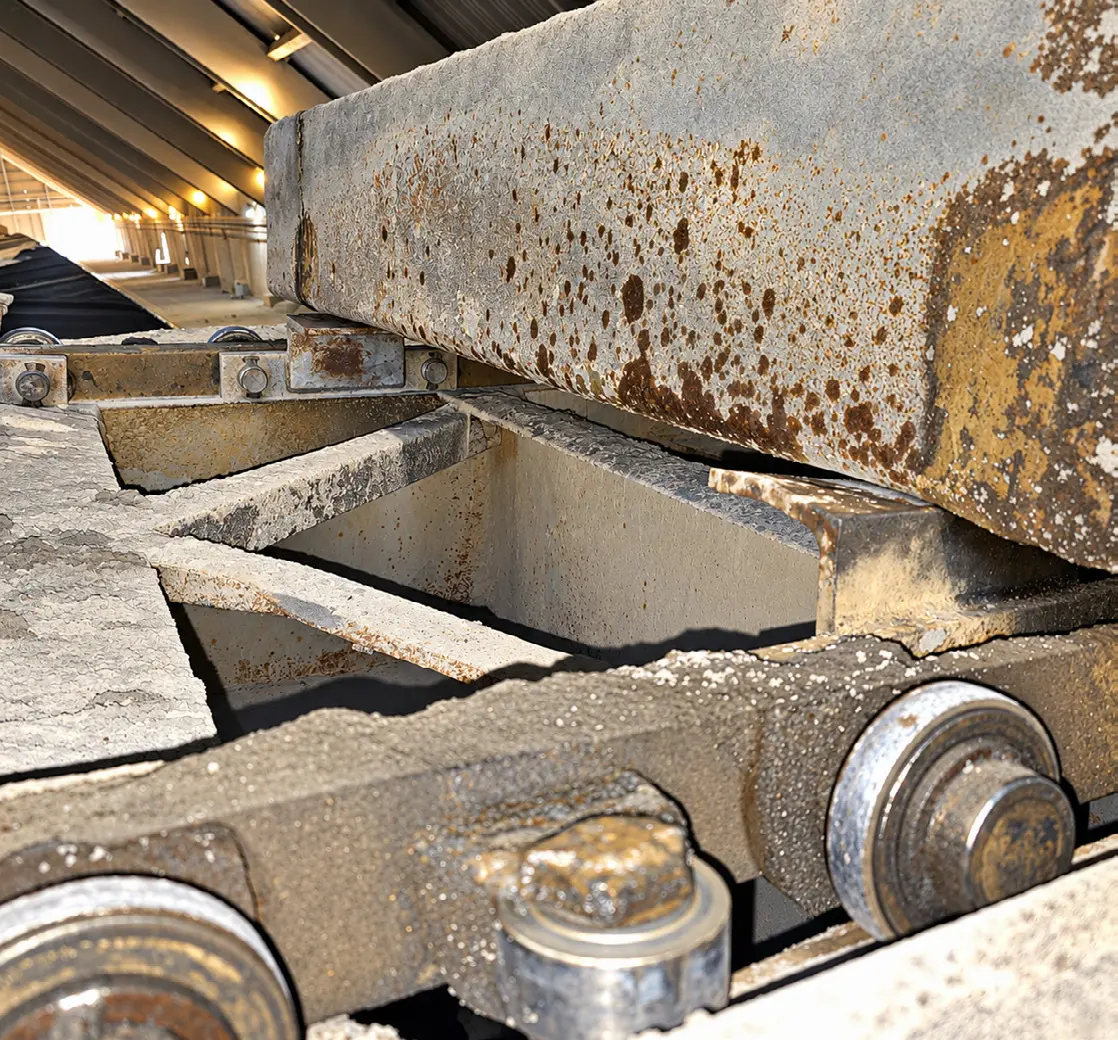
The chain’s good condition at the scheduled annual preventive replacement point led Fertinal to keep it in service and continue monitoring its condition. It has now exceeded 20 months in operation and remains in service. Fertinal holds an additional supply of AEC chains in inventory, ready for the next replacement.
More than 20 months in operation
All bearing and housing components were handled following strict cleanliness and alignment protocols throughout the assembly process. Component seating and alignment were progressively verified as the split bearing elements and custom housings were installed. The controlled assembly process ensured proper seating and seamless integration of the custom split housings and bearing elements, demonstrating the robustness and maintainability of the engineered bearing support system.

ABS and AEC, from engineering to operation
The project reflects ABS’s application-driven approach: addressing an operating problem through a targeted improvement tailored to the requirements of the equipment and the process.
ABS engineering, AEC’s specialized manufacturing, and on-site technical support carried the solution from development through startup. For Fertinal, this work translates into longer service life for the installed chain, contributing to equipment reliability and production continuity.